
The last country on our tour – Peru! And it is a great one to end with because it’s such a fascinating new country and culture for us. So far, it’s been a wonderful place to visit. The people are really friendly and helpful and the historical sites are amazing. We are trying out the little Spanish that we know and although much of what comes out ends up being more French than Spanish, we seem to be getting by.
Peru is geographically a super interesting place. The coast is very dry with sections of desert, then not far inland are the Andes running from the top the bottom of the country. The very sparsely populated Amazon takes up the rest of the landmass of Peru (a whopping 60%). Although Peru has had a tumultuous political and economic time the last few decades, it now seems stable and feels like a very safe place to travel.
Lima
We spent 3 days in Lima after our loooong flight from Amsterdam. We adjusted surprisingly quickly from the 8 hour time change and were out touristing the first afternoon. We stayed in a really nice and small hotel, Casa Bella, in San Isidro, a quiet upscale area in Lima. It’s a very walkable area, and we were able to stroll from there all the way to Miraflores (the trendy area) and right to the oceanside.
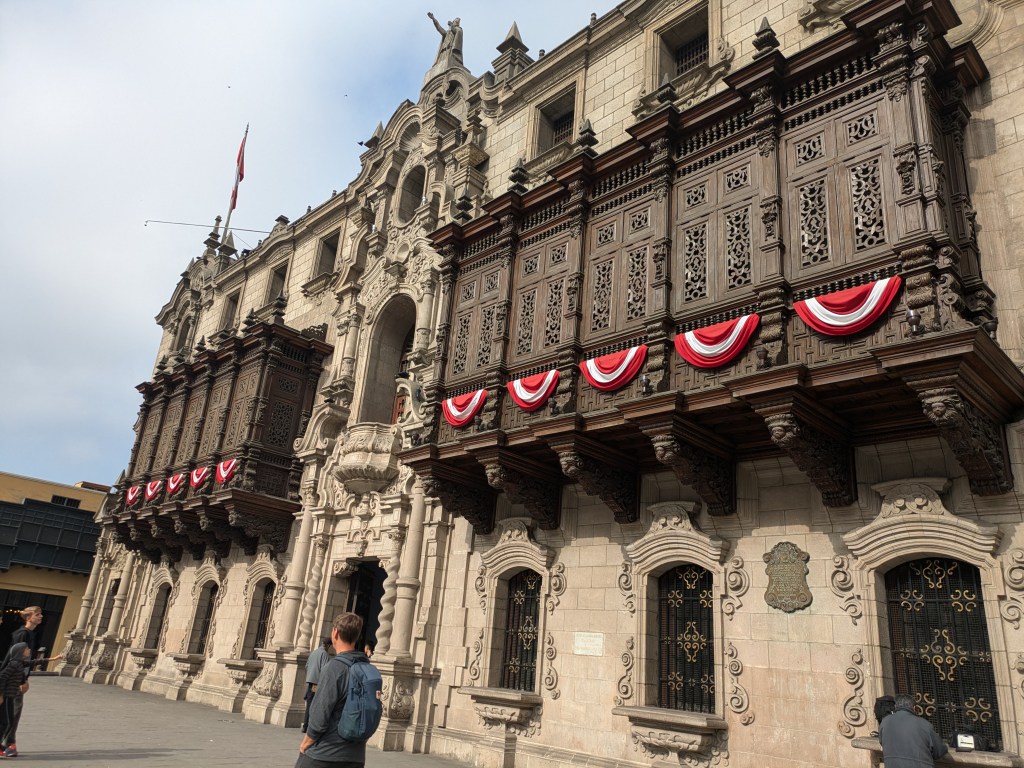
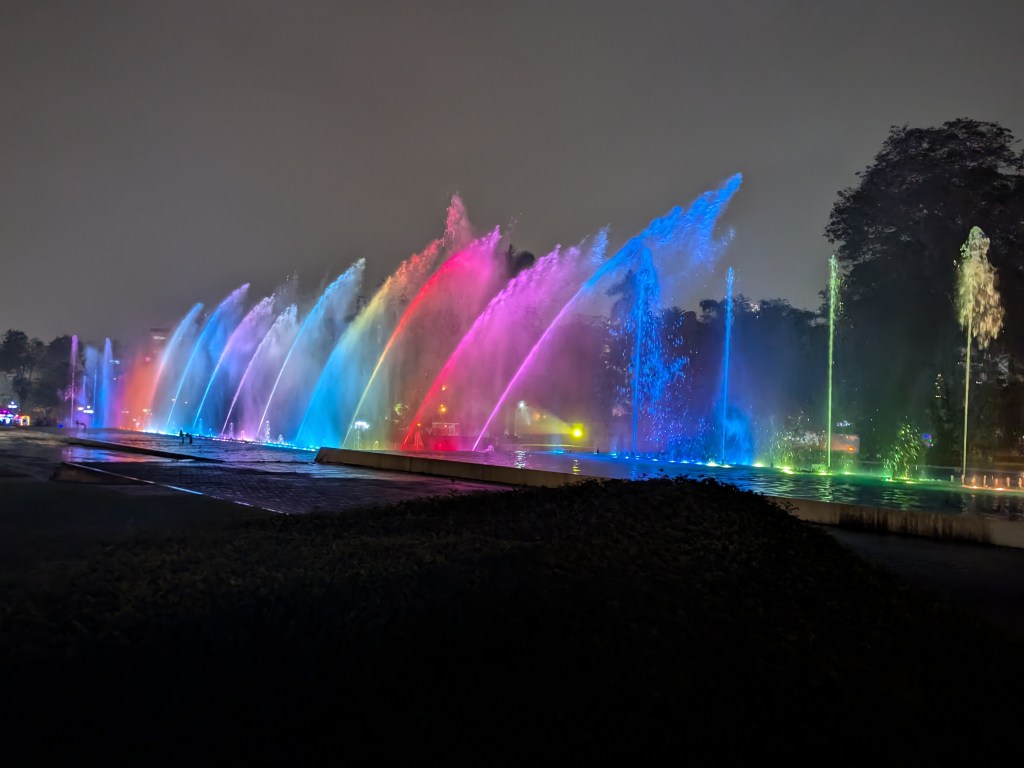
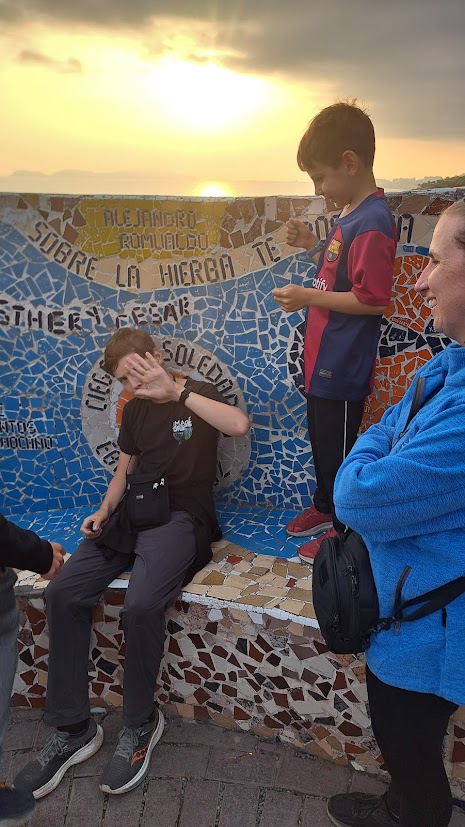
Lima definitely seems to have it all: history, ocean, eclectic neighbourhoods and great food. We tried to sample a little of each. Our first afternoon we spent visiting the old centro of Lima with a collection of buildings from the Spanish colonial era: the Basilica of Santa Domingo, the Basilica and Convent of San Francisco, the Palacio du Gobierno and the Catedral de Lima. The kids were most enamored with stuffies they could buy made out of baby alpaca wool (no alpacas were harmed in the making of the stuffies!). In the evening we went to see the “Magical Fountain Park” in the Parque de la Reserva where they put on a water and light show each evening. Apparently it’s currently the world record holder for the largest fountain complex in the world although I haven’t checked sources on that…
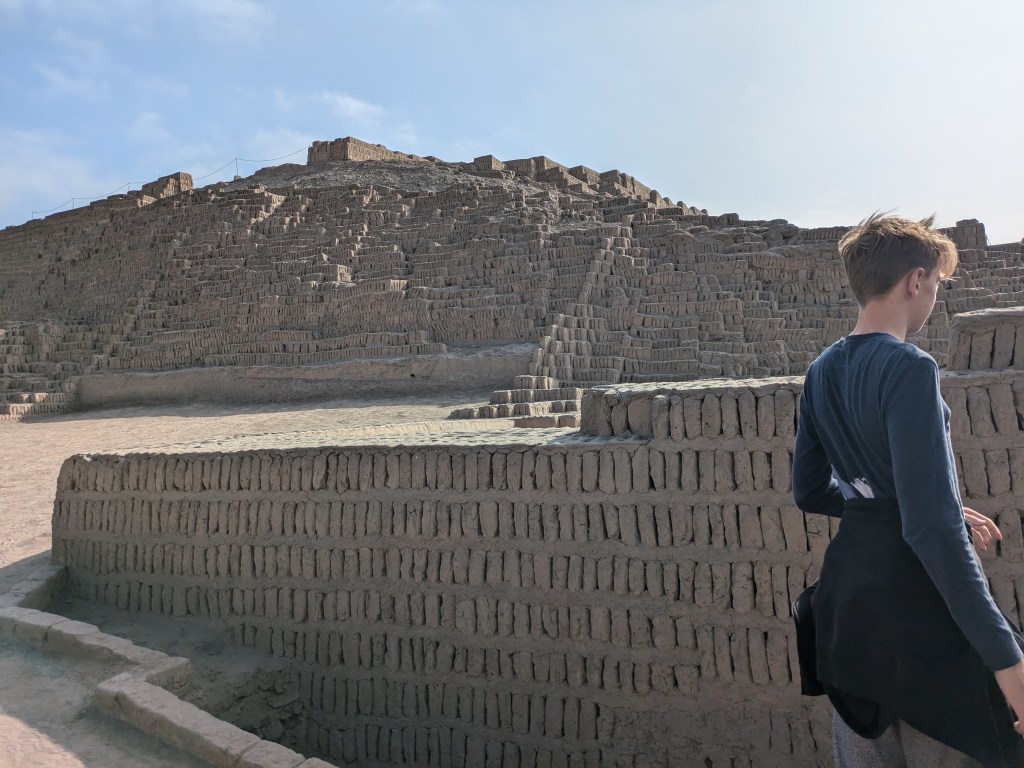
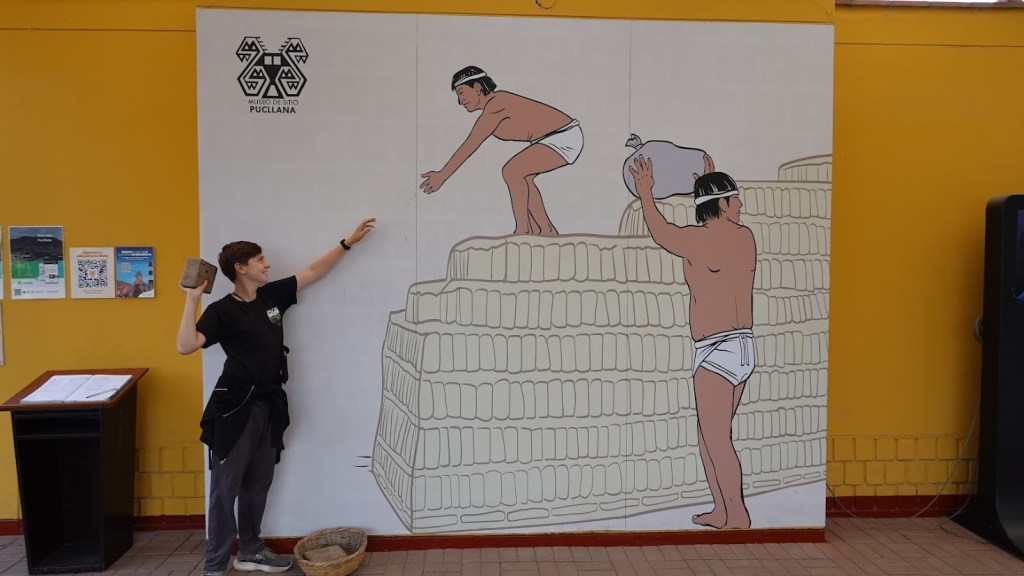
We also spent time visiting the Miraflores area which backs onto the ocean set with beautiful cliffs. The highlight of this area was the Huaca Pucllana, a pyramid structure built from about 500-900 AD by the pre-Inca people, the Waris, who it used as ceremonial and burial centre. It was abandoned around 900 AD when the people moved inland due to drought in the Lima area.
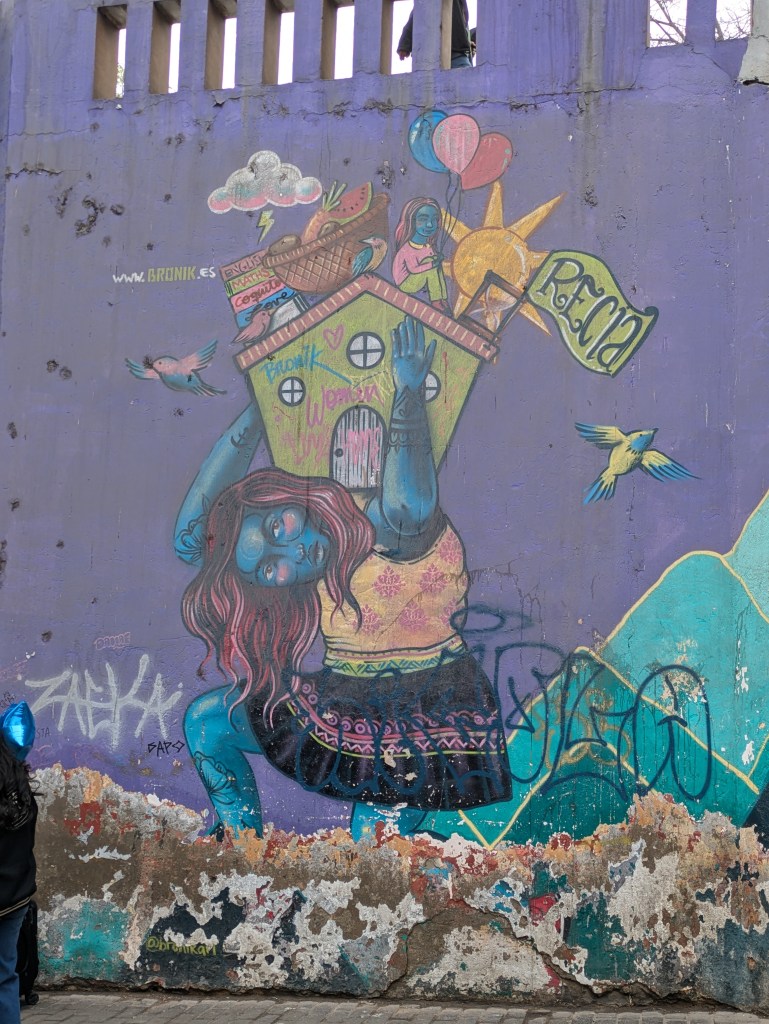
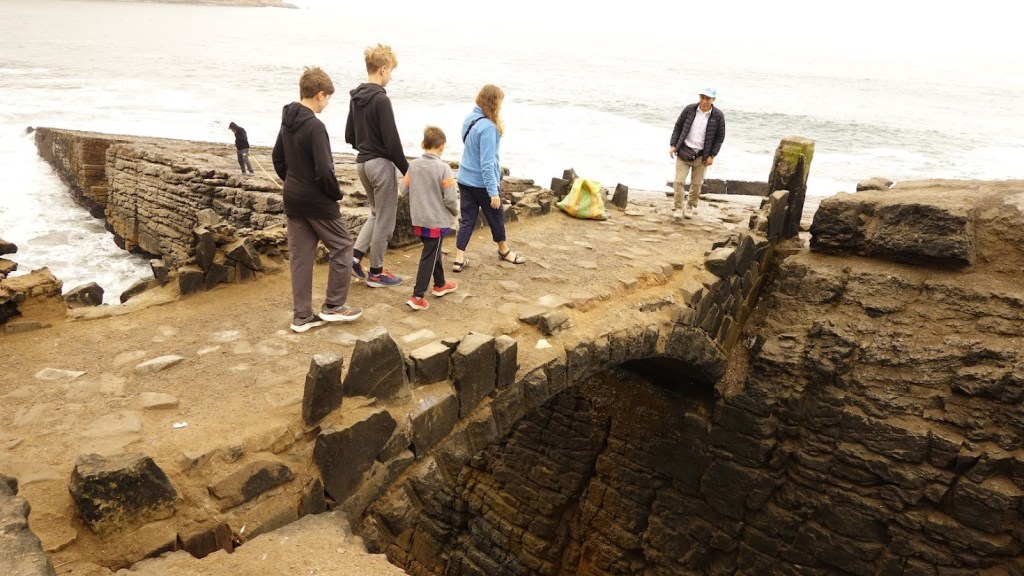
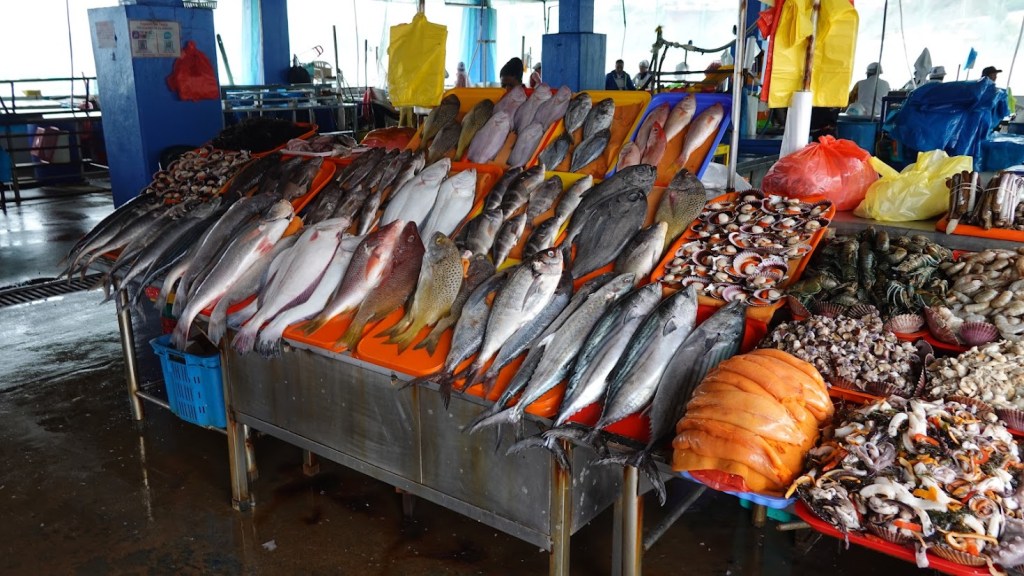
We did a great food and art tour which took us to the Chorillos and Barranco area. Chorillos is home to a busy fishing pier and is the working class area where mostly fisherman live. We had a really tasty breakfast at the pier of fish straight off of the boat and ate lunch in a tasty hole-in-the-wall restaurant we would never have found on our own. We were introduced the drink “Chicha Morada” made from black corn, so tasty. Barranco is the opposite of Chorillos – lots of big houses, brightly coloured buildings, murals everywhere – as it’s the bohemian hub of the region. A really fun and scenic place to walk around.
Sacred Valley
Next stop was a short flight to Cusco to see the Sacred Valley and Machu Picchu and we were particularly excited for this flight because the Davies family met us at the airport to join us for the rest of our trip, hooray! It’s great to see old friends as it’s been sooo long and also have a boost of enthusiasm for the final stage of our journey.
After landing in Cusco, we went straight to Ollantaytambo where we stayed for 3 nights at Apu Lodge (highly recommend!). Ollantaytambo is deep in the Sacred Valley – a beautiful area surrounded by the high peaks of the Andes. We had been so focused on Machu Picchu and had heard so much about that, that I hadn’t realized how incredible the rest of the area was. Ollantaytambo sits at 2800m elevation, so it was quite a shock for us coming from sea level. We all decided to take altitude medication and we were grateful that it worked so well.
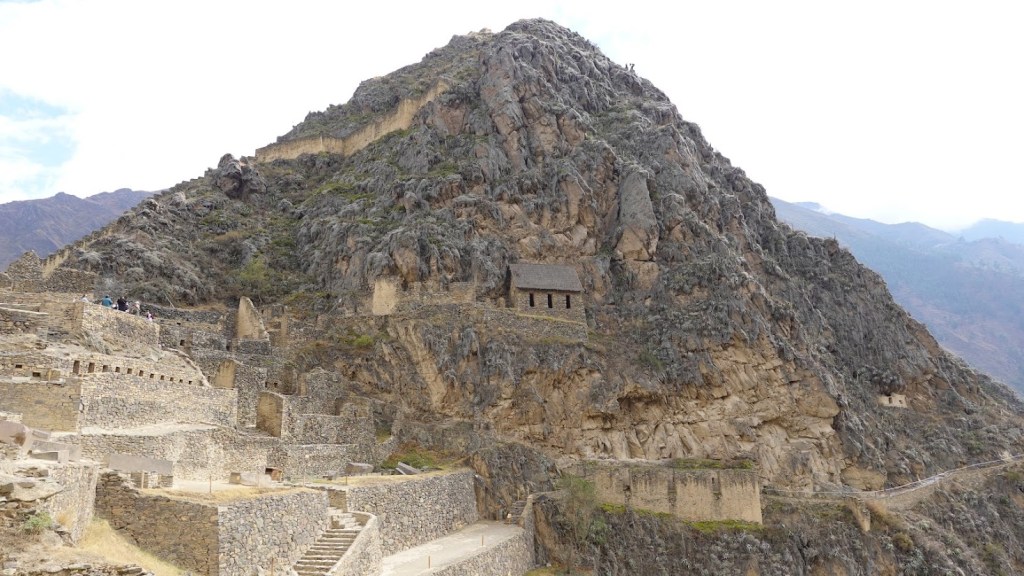
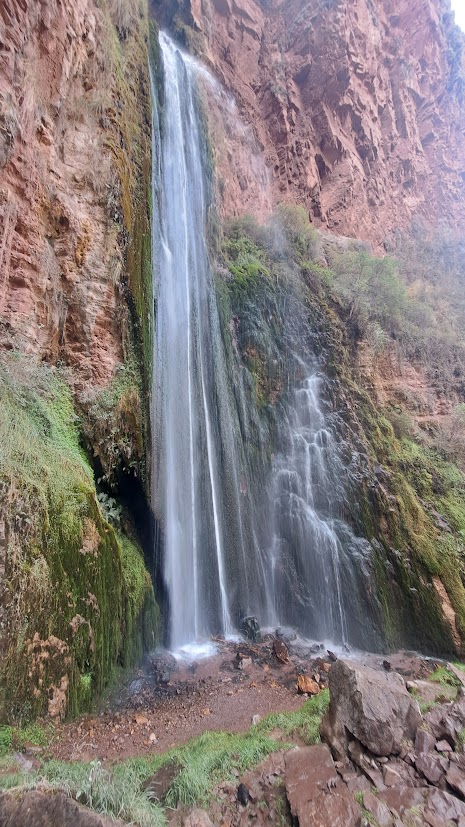
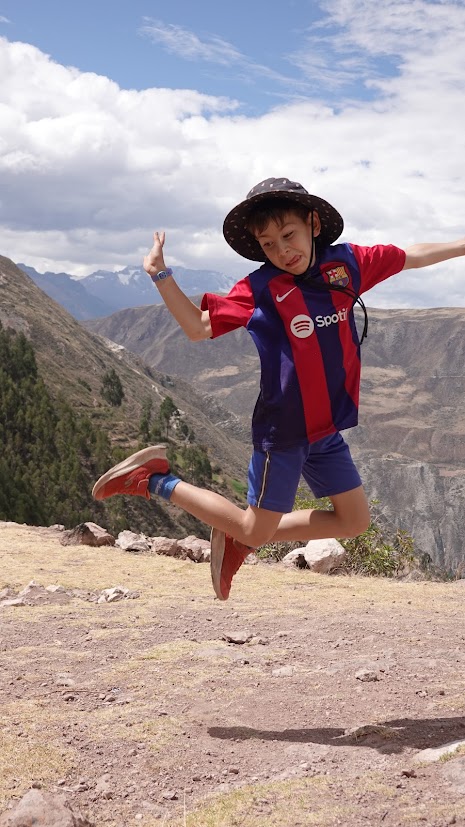
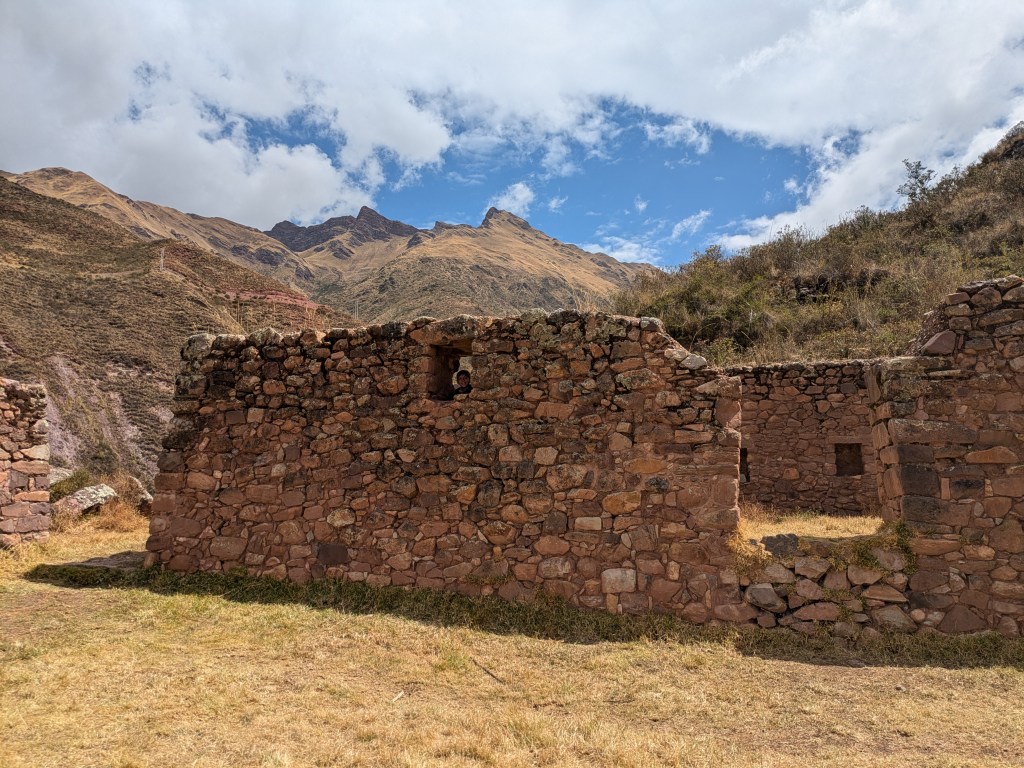
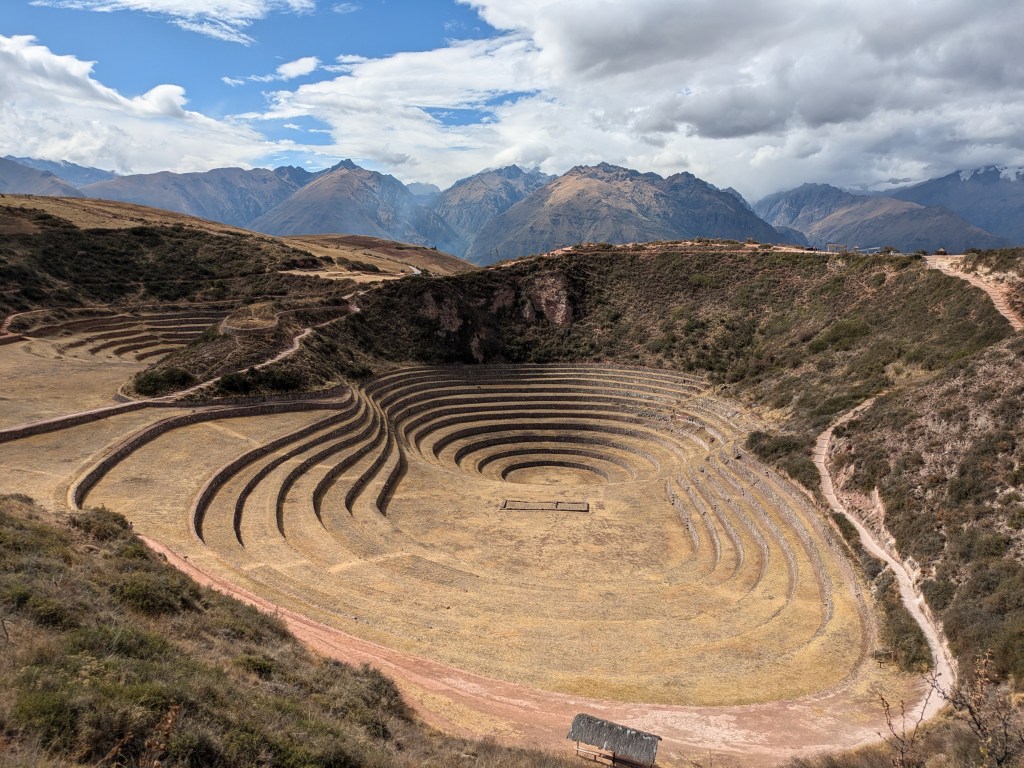
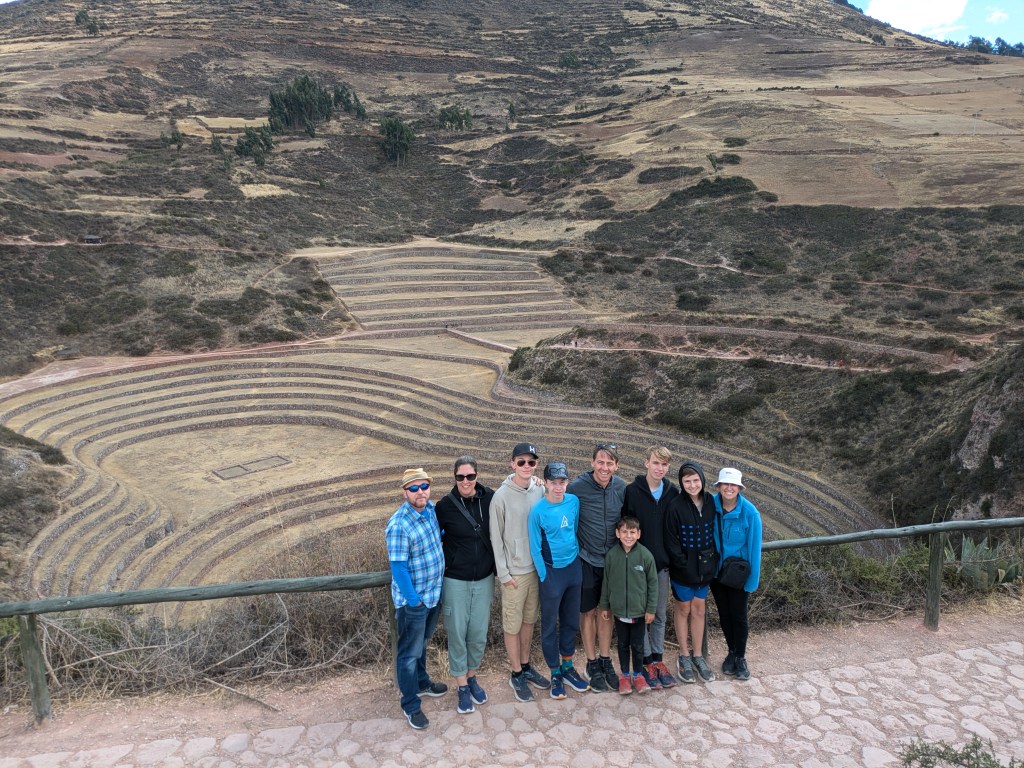
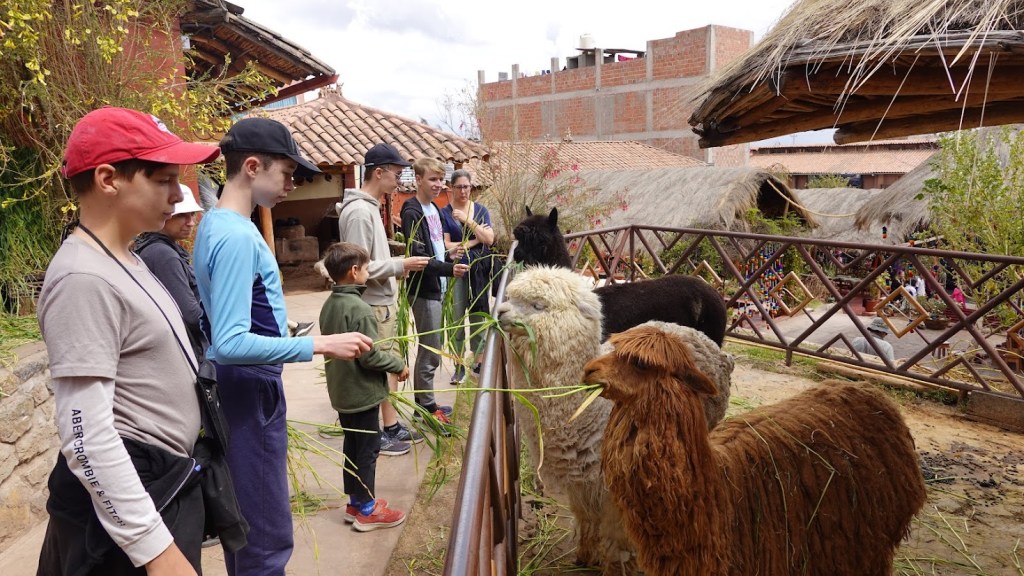
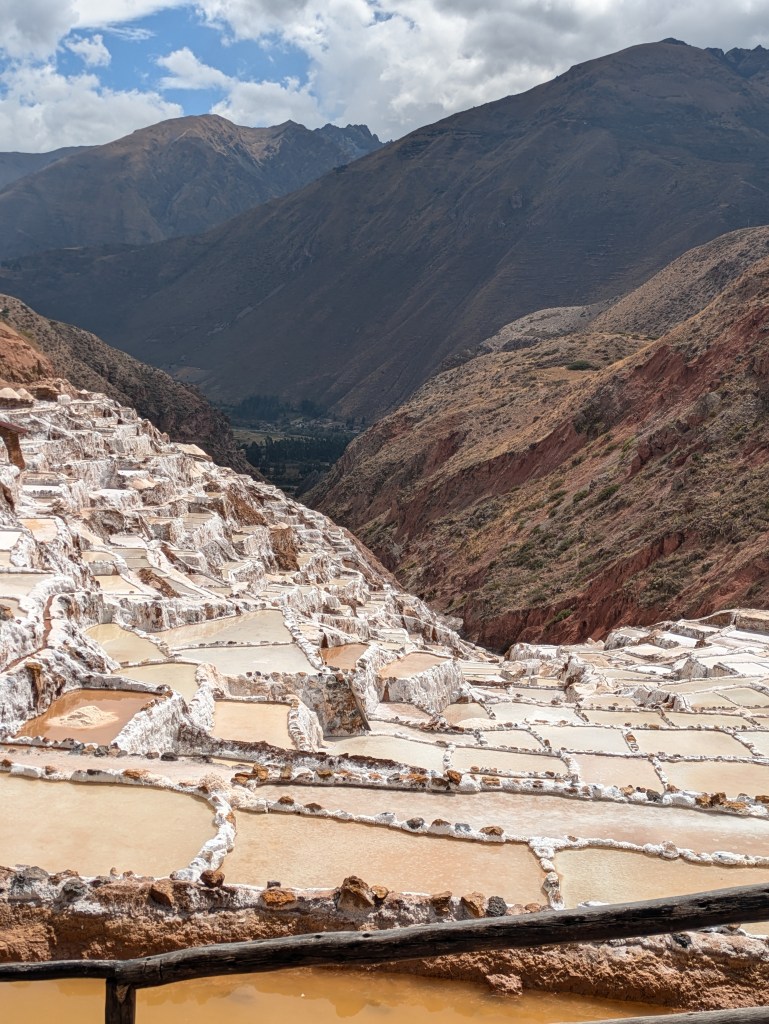
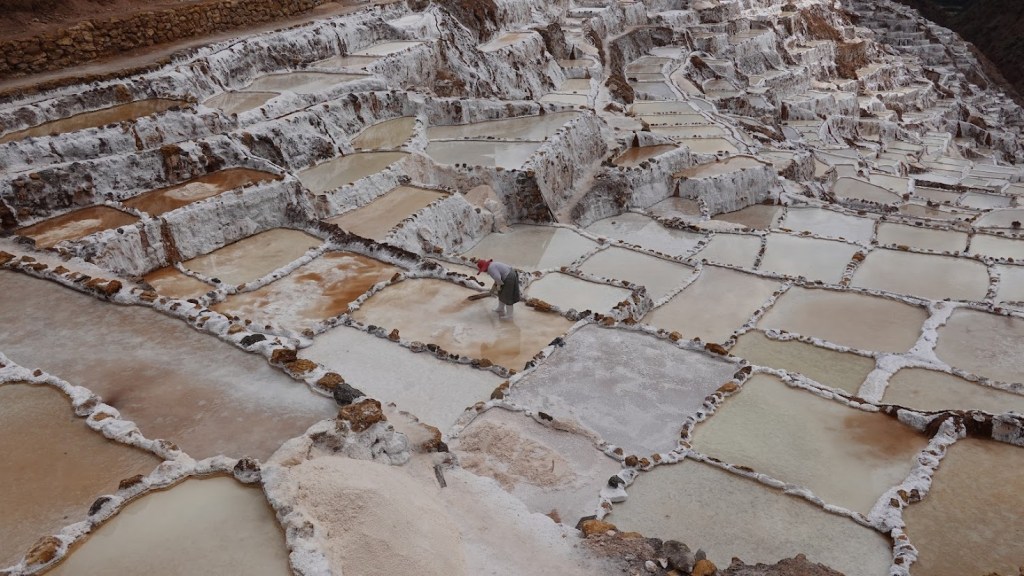
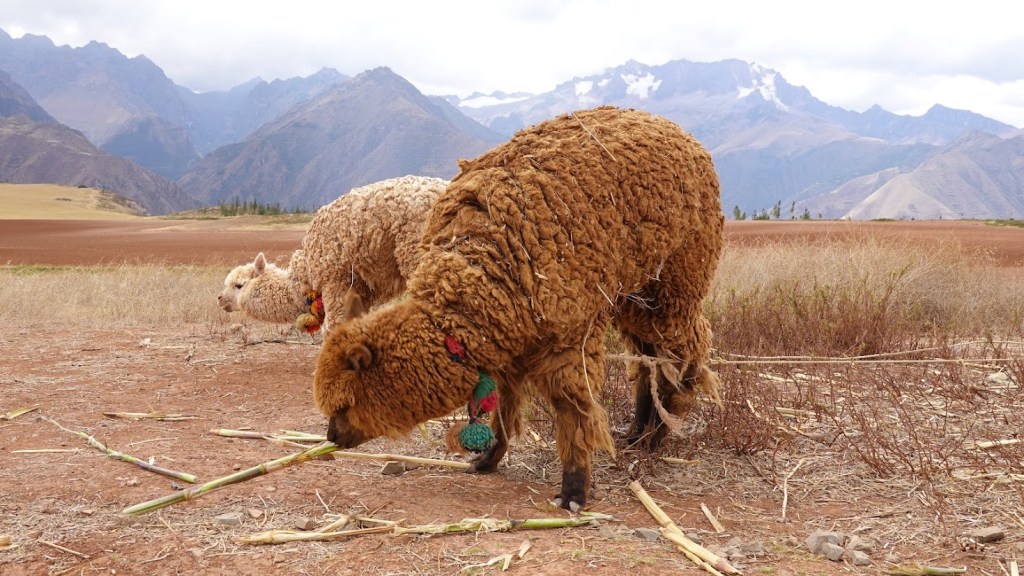
We spent two days exploring the area and seeing many spectacular sites. It was super interesting as well to learn about the Spanish invasion in the 1500’s and how they caused the downfall of the Inca empire. It’s really quite astonishing what the Inca people had built in such difficult and steep terrain. The ruins right in Ollantaytambo that we had a chance to explore were so impressive, as were the Raqaypata Ruins on top of the Perolniyoc Waterfall which we had to climb over 1.5 hours to see. We also visited the Maras salt flats that were originally used by the Inca people but are still in use today, and the Moray site with its terraced circular depressions apparently used for finely tuned agricultural experimentation. During all of this touring around we reached a peak altitude of 3777m – the highest on our whole trip.
Machu Picchu
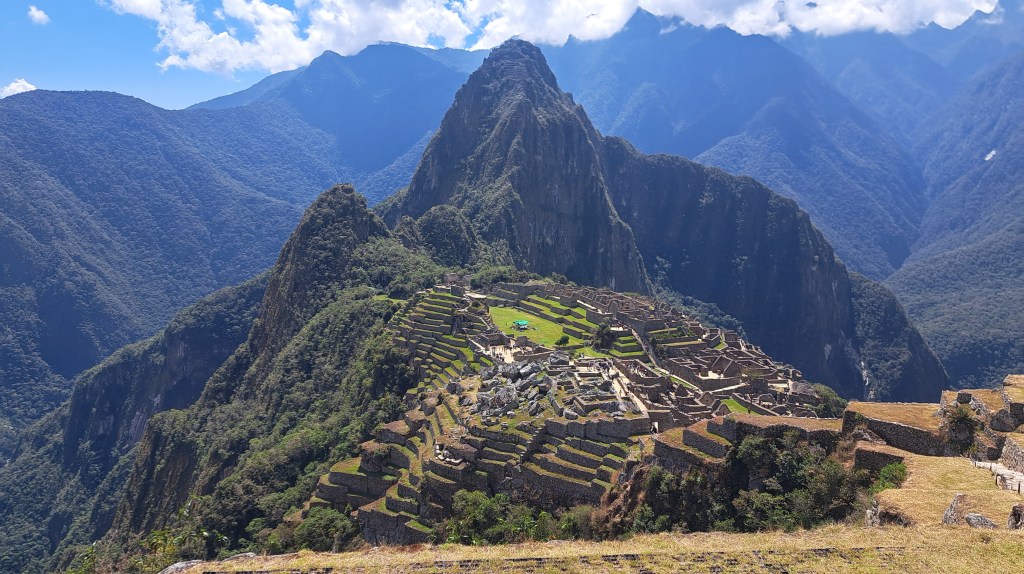
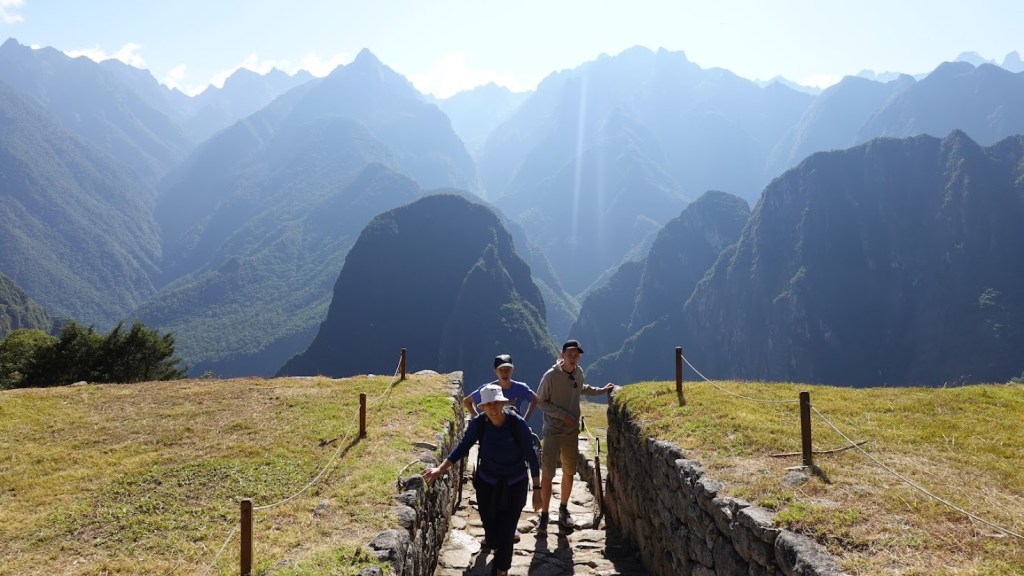
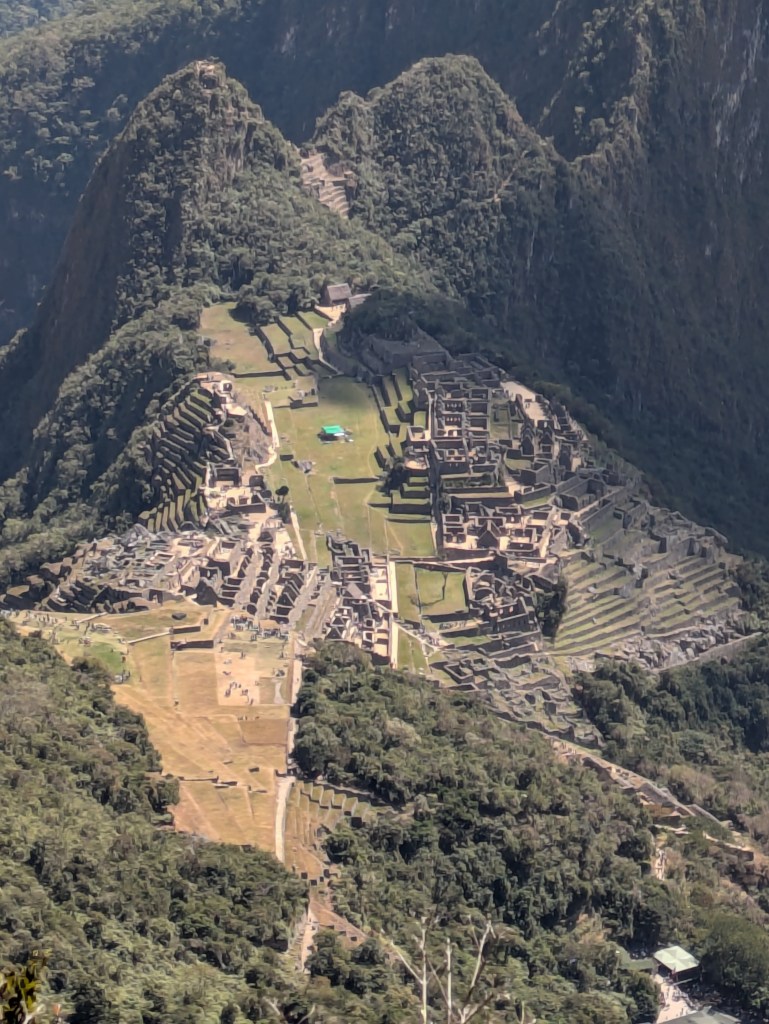
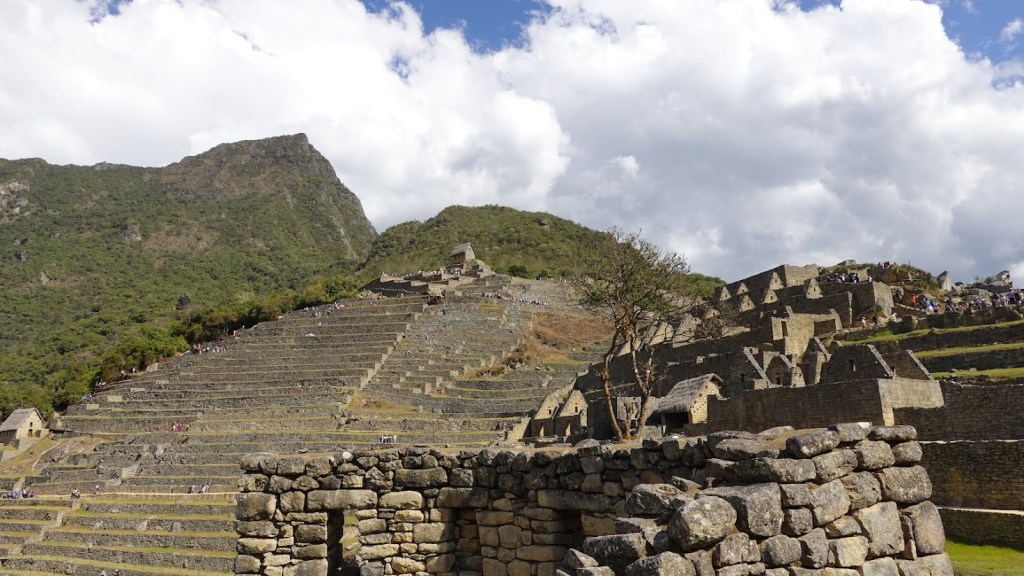
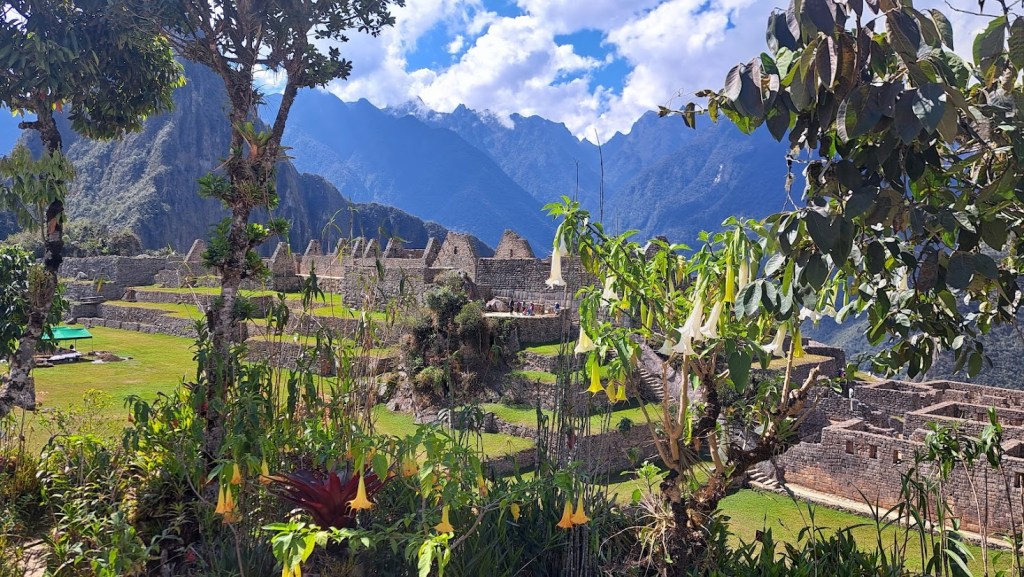
Our final day in the Sacred Valley was spent at Machu Picchu and it needs a section all to itself because there are so many photos, but I will try to keep it short! Machu Picchu, built in the 15th century, is the most famous of the Inca icons and since it’s fairly low (2600m) and situated close to the Urubamba river, there is a kind of tropical mountain climate there that is so different than the rest of the Sacred Valley (read: we were freezing in the morning getting there and SO hot when we were there). Machu Picchu was a massive citadel that is thought to have housed about 750 people but was abandoned in the 16th century when the Spanish arrived. It was re-discovered in the 1900’s by Americans (although the locals knew it was there all along).
The journey to Machu Picchu started in January when we had to go through a complicated process to buy tickets as they are trying to limit numbers at the site. It didn’t feel like they were limiting tickets however as the place was SO crowded, so I can’t imagine what it was like before. On the day of the visit itself, we got up at 3:45AM to make it to the 5:00AM train followed by a shuttle bus up to the site. We arrived at about 8AM after 4 hours of travel, ug, only to find there were more lines that we had to stand in.
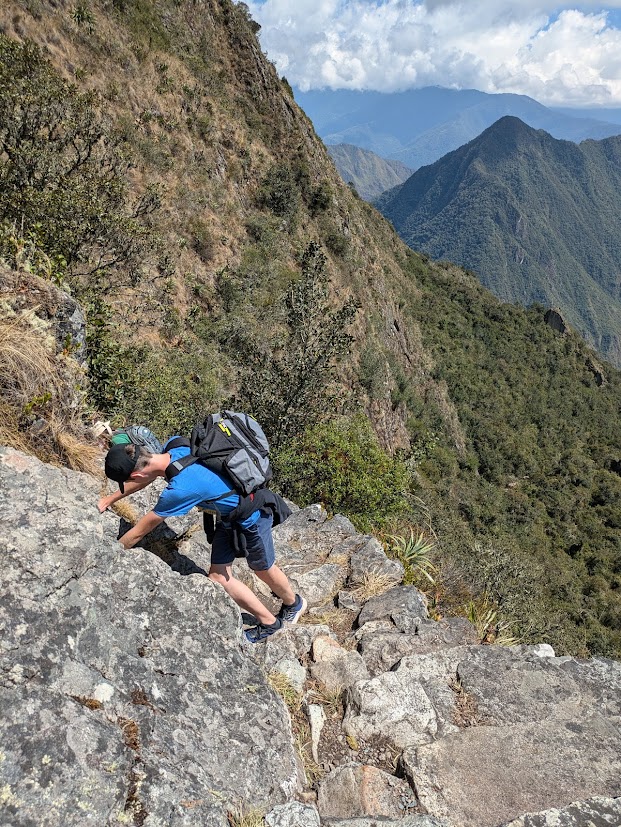
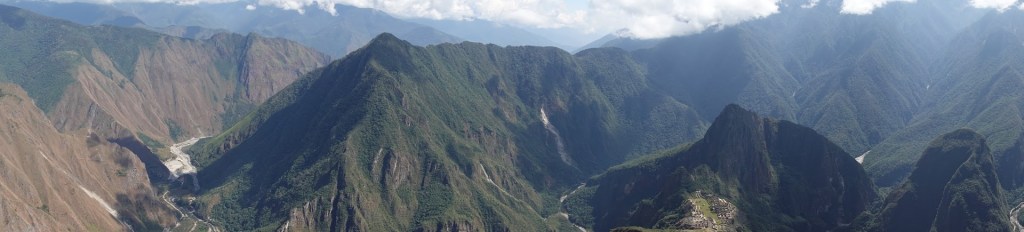
We started our tour by climbing up the Machu Picchu mountain to get a great sense of the gorgeous area. It turned out to be a really rigourous climb of about 2 hours and many many stairs. The views however were spectacular. After an almost equally challenging climb down, we spent the afternoon roaming around the ruins themselves. Such an engineering marvel although very different and much less ornate than similar types of ruins we saw in Asia and Europe which were built around the same time or earlier. The Incas seem to have much more of a focus on agriculture, rather than religion or worship.



Up Next
More Peru! We are spending a few days in Cusco, then off to the Amazon. Home in a little over a week, can’t believe it! Thanks for reading this far, this post ended up being longer than I planned 🙂
 Our Family Sabbatical Blog
3 responses to “First week in Peru: Lima and Sacred Valley”
Thanks Fiona
That was great coverage and the photos were spectacular. We followed you on life 360 but somehow didn’t see you at Machu Picchu. You are still pretty high in Cusco.
LikeLiked by 1 person
No cell reception at Machu Picchu which is why you never saw us there! We went up to 3625m today in Cusco but no altitude sickness problems in our group.
LikeLike
Spectacular views indeed!
LikeLike